I recently subscribed to Heather Cox Richardson’s lucid and concise “Letters from an American” journal, and thought it worth sharing this example of the Substack publishing platform’s simple, lightweight subscription form.
Anyone involved in content marketing, especially premium content, should be concerned with form design and usability. A good form increases the likelihood of achieving an engagement or conversion goal. A poorly designed form, or even a well designed form with a long or complicated set of fields, may stop a reader from taking that critical final step, driving down success rates and blunting the effectiveness of what is typically an extensive, cross-functional marketing effort.
Less is more. And more inviting.
The Substack form is clean, clear, and inviting. Its simplicity derives from a single-minded focus on task completion and decision support, offering information in place of messaging, while offering the reader a range of options that puts them in control and creates a sense of confidence.
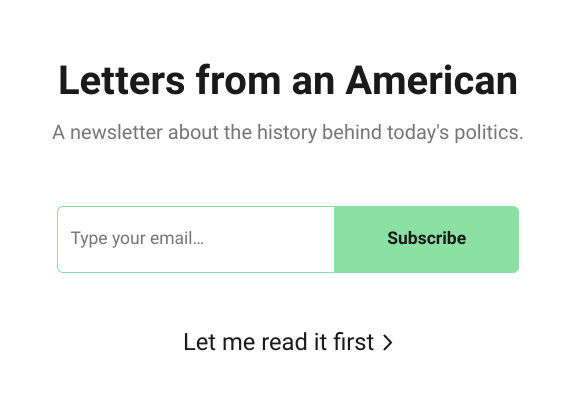
The first section of the form gives the reader the choice of entering their email or deferring their decision by exploring the content further (and using empathetic “inner dialog” language that creates a sense of self-determination):
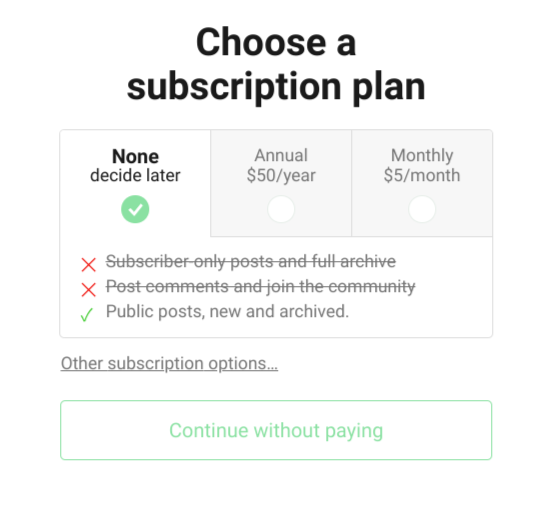
The next form allows the reader to toggle through their options with labeling that makes their choices clear, including another opportunity to defer a decision to subscribe while continuing to explore the content:
The credit card entry form, along with terms and conditions, only appears for those options that require payment, The credit card form itself condenses the required information into a single field:
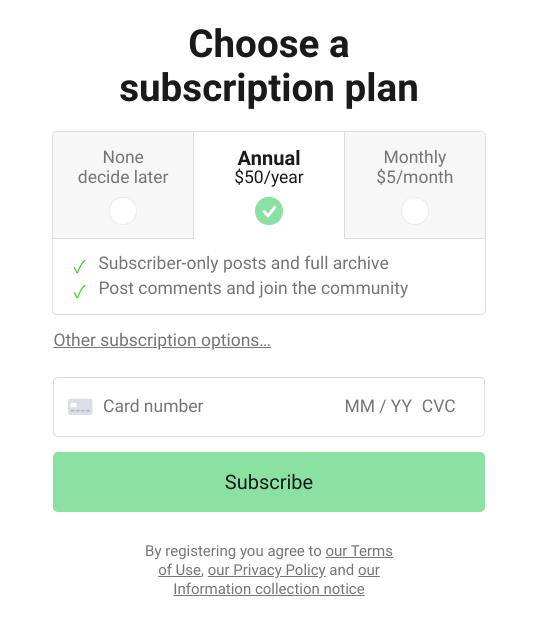
The benefits of a paid subscription remain consistent when the reader toggles between plans, highlighting that the price difference between the annual and monthly plans:

Why do many forms include a long and challenging array of fields?
Content teams and marketing operations teams may have conflicting goals when it comes to form design. Content teams want to convert readers. Sales and marketing operations want data, and lots of it, to build out their customer databases with names, titles, companies, and contact information. But asking for less information at the initial engagement may increase the overall number of engagements in the long term by making it easy to say “yes” while building a stronger relationship between companies and their target audiences.
 Lucius Michel: Words with purpose