The mantra at my previous employer was “Dare to Delight.” It’s an almost irresistible concept, and one embraced easily by executives and stakeholders. But “delight” isn’t a goal; it’s an outcome that can only be achieved by understanding the obstacles to delight: disbelief, distraction, and other words that also happen to begin with the letter D.
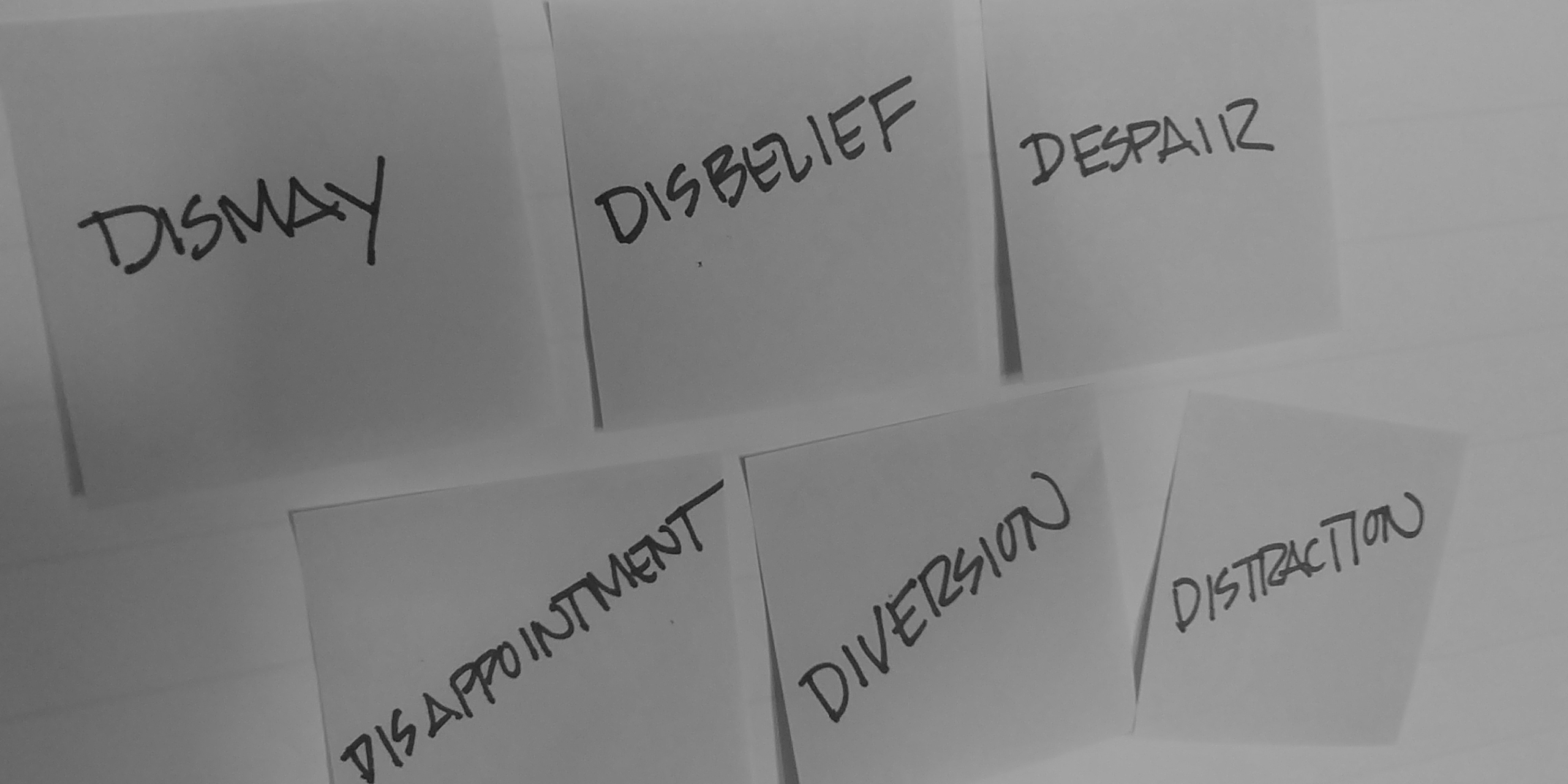
If we seek to “delight,” we have to identify eliminate anything that stands in its way. These are the “deadly D words” that I keep as a reminder when creating content, working on microcopy, or structuring content elements to help users achieve their objectives:
Disbelief. Avoid the hyperbole. “The world’s only…”, Extraordinary value…”, “Once in a lifetime…,” and the like. Phrases like this invite skepticism and are counterproductive. They are also irrelevant. Belief and trust are earned through language that addresses the reader’s concern and offers evidence that can be verified.
Distraction: Drawing someone’s attention away from their original interest or intent with unrelated of irrelevant content—such as an offer for a different product—is a calculated risk. Which outcome do you actually want to measure? Juggling competing conversion points often signals conflicting objectives to a potential customer and stalls the engagement by prompting users to ask themselves, “What, exactly, do you want me to do?”
Diversion: Defined as “turning something aside from its course,” diversion can be accidental (by bad design) or deliberate (by bad intention). Helping the user navigate the original task they want—and expect—to complete is the default goal of user experience and service design. When optional choices are available, the features and benefits should be clearly spelled out so the user maintains full (and informed) control over whether to stay the course or opt for a different outcome.
Disappointment: Enticement is easy. Excitement is much more difficult to sustain. It’s a paradox that creating expectations increases the risk of disappointment—a persistent threat that lurks at every point in the customer journey. Companies that are committed to monitoring and managing the end-to-end customer experience (and who understand how to communicate as expectations change over time) are better prepared to prevent and respond to a disappointed customer.
Dismay. Poor design, misdirection, and jargon that leaves the user confused or disoriented destroys confidence, prevents task completion, and creates an adversarial relationship between companies and prospective customers. Don’t make giving up the easier choice.
Despair: A user’s dismay can be rectified and confidence restored, but despair signals the end of the engagement. Inline help, chat bots, and easy-to-find customer assistance help users regain a sense of control, especially for tasks that require multiple steps or that are governed by conditional (if/then) logic. It’s critical to test and evaluate the “break points” of an experience, where the majority of users are overwhelmed and the tolerance limits of an online, “self-service” experience are reached.
Be a detective: Look for the warning signs
User acceptance and user validation are critical steps in determining if a new application, website, or other interactive experience is ready for release. Understanding how people respond to a design involves a mix of observed and recorded routines where the user’s actions and reactions provide the basis for refining the design, content, or controls—or rethinking the approach. Project stakeholders may be anxious for positive feedback and “green lights,” but experience design professionals need to be tuned into the warning signs that might indicate an obstacle to user acceptance and success—and the overall success of a project.
 Lucius Michel: Words with purpose